Balgarianovinite.com As Bulgaria is joining the eurozone on January 1, 2026, BTA’s English service is running an updated and enlarged version of a timeline of the landmark dates in the country’s progress towards accession that was first published in July 2025.
July 1, 1997: A strict exchange rate regime known as “currency board arrangement” is introduced in Bulgaria under provisions of a new Bulgarian National Bank Act, which enters into force on that date. The Bulgarian lev is anchored to the Deutsche Mark in a ratio of BGL 1,000 per DEM 1.
January 4, 1999: The euro replaces the Deutsche Mark as a peg currency, with the exchange rate fixed at BGL 1,955.83 per EUR 1.
July 1, 1999: As the lev is re-denominated by dropping three zeros, the currency-board exchange rate is fixed at BGN 1.95583 per EUR 1.
April 25, 2005: Bulgaria and the European Union sign a Treaty concerning the country’s accession to the EU, under which Sofia undertakes to apply the powers and jurisdictions of the EU institutions as set out in the Founding Treaties. The Act concerning the conditions of accession of Bulgaria and the adjustments to the treaties on which the EU is founded obliges Bulgaria to participate in the Economic and Monetary Union from the date of accession as a Member State with a derogation.
May 11, 2005: The National Assembly votes, 231-1 with 2 abstentions, to ratify Bulgaria’s EU Accession Treaty.
September 2009: Finance Minister Simeon Djankov says Bulgaria plans to enter the Exchange Rate Mechanism II (ERM II) in November, but this is delayed due to a budget deficit exceeding the Maastricht criterion.
July 2011: Djankov says that the adoption of the euro will be postponed until the end of the eurozone sovereign-debt crisis.
January 2015: Finance Minister Vladislav Goranov says Bulgaria may join ERM II before the end of 2018.
July 3, 2015: By Decree No. 168, the Council of Ministers establishes a Coordination Council to prepare the country for eurozone membership. The Council is tasked with drafting a plan for the introduction of the euro, proposing a target date, and organizing the preparation and coordination of the expert working groups.
June 29, 2018: The Bulgarian authorities send relevant stakeholders a letter of intent regarding the country’s intention to join ERM II and the Banking Union. The letter outlines measures including banking supervision, macroprudential framework, and the governance of state-owned enterprises.
July 12, 2018: The Eurogroup welcomes Bulgaria’s intention to put in place the necessary elements for successful entry into ERM II.
July 10, 2020: The Bulgarian lev enters ERM II by mutual agreement of all ERM II parties (the ministers of the euro area Member States, the President of the European Central Bank, and the minister and the central bank governor of Denmark). Bulgaria has to remain in this so-called “eurozone waiting room” without severe tensions and without devaluing its central rate against the euro for at least two years before it could qualify to adopt the euro. Bulgaria commits unilaterally to continue its currency board arrangement within the ERM II.
October 1, 2020: Bulgaria and its central bank join the European Banking Union under Decision (EU) 2020/1015 of the European Central Bank (ECB) of 24 June 2020 on the establishment of close cooperation between the ECB and the Bulgarian National Bank (BNB). For the first time since its inception, the Banking Union extends its span beyond members of the euro area.
June 30, 2021: Bulgaria’s Government and central bank adopt a draft national plan for the adoption of the euro, stating an intention for the country to join the eurozone on January 1, 2024.
May 30, 2022: The first version of the National Euro Changeover Plan is adopted by Council of Ministers Decision No. 344. The plan is subsequently updated by three government decisions: on November 13, 2023, on July 2, 2025, and on September 25, 2026.
October 27, 2022: The National Assembly adopts a Resolution in Connection with the Adoption of the Euro in the Republic of Bulgaria, according to which Bulgaria will adopt the euro while preserving the official exchange rate of the lev against the euro, which is equal to the central rate of BGN 1.95583/EUR 1.
November 9, 2022: During cabinet-forming consultations with the Vazrazhdane Parliamentary Group, President Rumen Radev flatly refuses to call a referendum on the euro, arguing that this would be unlawful and unconstitutional and would violate the primacy of EU law over domestic legislation.
December 6, 2022: Bulgaria, the eurozone Member States and the European Commission sign a Memorandum of Understanding on the start of the production of euro coins and the preparatory tasks prior to the start of this production.
April 7, 2023: The Vazrazhdane Party submit to Parliament a proposal for organizing a national referendum with the question “Do you agree that the Bulgarian lev should be the only official currency in Bulgaria until 2043?” A total of 603,356 signatures are collected in support of the proposal, of which 132,383 or 21.9% are found to be invalid. The 470,973 valid signatures are enough to bind Parliament to consider the initiative.
July 7, 2023: The legislature votes, 68-98 with 46 abstentions, to reject Vazrazhdane’s motion. The majority argues that it is unlawful to submit to a referendum matters regulated by international treaties concluded by Bulgaria and that such a referendum could only be held before such treaties have been ratified.
July 14, 2023: Vazrazhdane petitions the Constitutional Court to declare unconstitutional the National Assembly resolution refusing to organize a referendum.
November 2, 2023: The BNB Governing Council adopts Decision No. 479 on the design for the Bulgarian national side of all euro coin denominations and the graphic design for the EUR 2 coin edge inscription.
November 13, 2023: A revised version of the National Euro Changeover Plan is adopted by Council of Ministers Decision No. 797, setting January 1, 2025 as a target date for the adoption of the euro.
February 1, 2024: The National Assembly passes a new Bulgarian National Bank Act, defining the powers and functions of this country’s central bank as part of the European System of Central Banks. The law is to enter into force on the date set in an EU Council Decision for the adoption of the euro by Bulgaria.
February 8, 2024: The Constitutional Court adopts a decision dismissing conclusively Vazrazhdane’s initiative to hold a national referendum on keeping the lev as the country’s only official currency until 2043.
February 12, 2024: The BNB announces it had finished the process of coordinating and approving the design of the Bulgarian euro coins. The design reproduces the current symbols featured on the Bulgarian circulation coins (the Madara Horseman on the 1, 2, 5, 10, 20 and 50 euro cent coins, St John of Rila on the EUR 1 coin, and St Paisii of Hilandar on the EUR 2 coin).
March 25, 2024: The Finance Ministry launches https://evroto.bg, an information website on the introduction of the euro in Bulgaria.
June 26, 2024: European Commission and ECB Convergence Reports are published, saying that Bulgaria does not meet the price stability criterion for adopting the euro.
July 26, 2024: The National Assembly passes a Resolution on Accelerating and Completing the Process of Practical Preparations for the Adoption of the Euro in Bulgaria. The Resolution states that if the price stability criterion is complied with by December 31, 2024, the Council of Ministers must require July 1, 2025 as the date of the country’s admission to the eurozone. The Resolution confirms that the euro will be adopted at the fixed central rate.
August 7, 2024: The National Assembly passes an Introduction of the Euro in the Republic of Bulgaria Act, according to which the single currency will be introduced on the date set by an EU Council Decision and an EU Council Regulation adopted in accordance with Article 140 of the Treaty on the Functioning of the European Union.
September 4, 2024: Parliament votes, 63-107 with 2 abstentions, to reject a motion by Vazrazhdane, seconded by There Is Such a People, on the conduct of a national referendum asking voters to say whether they agree that the Bulgarian lev should be kept as the country’s only official currency until 2043.
February 19, 2025: Eurostat publishes consumer price dynamics data for February in the EU and the euro area, showing that the inflation rate in Bulgaria already meets the price stability requirement under the Maastricht criteria for euro area entry.
February 22, 2025: During a protest organized by Vazrazhdane against the adoption of the euro, demonstrators, including four MPs of that party, hurl red paint, eggs and fireworks at the European Commission Representation building in Sofia. The door of the House of Europe is set on fire. Ten police officers are injured. Nine arrests are made, and six persons are charged with hooliganism.
February 24, 2025: The Council of Ministers adopts Decision No. 92 to request ad hoc convergence reports on Bulgaria from the European Commission and the ECB.
February 25, 2025: Bulgarian Finance Minister Temenuzhka Petkova and BNB Governor Dimitar Radev sign a joint letter to European Commission President Ursula von der Leyen and ECB President Christine Lagarde, requesting ad hoc convergence reports on Bulgaria.
May 2025: A Eurobarometer survey finds that 50% of Bulgarians are against adopting the euro, while 43% are in favour.
May 5, 2025: For a third time, Vazrazhdane submit to Parliament their motion on the conduct of a referendum on postponing the adoption of the euro.
May 9, 2025: Bulgarian President Rumen Radev tables a proposal to the National Assembly to resolve on holding a national referendum in which Bulgarians would be asked whether they agree to the introduction of the euro in Bulgaria in 2026.
May 13, 2025: By Order No. 51-550-01-301, National Assembly Chair Nataliya Kiselova rejects the President’s proposal, arguing that it is inadmissible because it is inconsistent with the Constitution, the Treaty on the Functioning of the EU, Bulgaria’s EU Accession Treaty, the Act concerning the conditions of accession, and the Direct Citizen Participation in State and Local Government Act.
May 23, 2025: President Radev petitions the Constitutional Court to nullify Kiselova’s refusal to include his proposal for the conduct of a national referendum on Parliament’s agenda.
May 30, 2025: Petition No. 0857/2025 is submitted to the European Parliament (EP) by Rumyana Chenalova (Bulgarian) on behalf of Doyran 2025 Association signed by 1556 persons on whether Bulgaria fulfils the economic conditions necessary in order to join the Economic and Monetary Union. The petition is closed on October 17.
June 4, 2025: In its 2025 Convergence Report, prepared at the request of the Bulgarian authorities, the European Commission concludes that Bulgaria is ready to adopt the euro as of January 1, 2026. The report finds that Bulgaria fulfils all four nominal convergence criteria.
June 4, 2025: The ECB releases its 2025 Convergence Report on Bulgaria, concluding that Bulgaria has made good progress towards economic convergence with the euro area and meets the necessary legal requirements.
June 4, 2025: Petition No. 0933/2025 is submitted to the EP by E.K. (Bulgarian) on Bulgaria’s refusal to hold a referendum on the adoption of the euro. On July 17, the EP Committee on Petitions declares the petition inadmissible because matters seemingly do not come within the Union’s fields of activity.
June 10, 2025: The Constitutional Court unanimously denies President Radev’s petition to declare unconstitutional Kiselova’s rejection of his euro adoption referendum proposal.
June 19, 2025: The Eurogroup endorses a recommendation from the euro area member states to the Council of the EU that Bulgaria should introduce the euro on January 1, 2026.
June 20, 2025: At an Economic and Financial Affairs Council (ECOFIN) meeting in Luxembourg, EU finance ministers adopt a decision unanimously supporting Bulgaria’s euro area accession as of January 1, 2026.
June 24, 2025: The European Parliament Committee on Economic and Monetary Affairs votes, 46-3 with 5 abstentions, to approve a draft report on Bulgaria’s adoption of the euro on January 1, 2026.
June 26, 2025: In conclusions adopted at a European Council meeting, the EU heads of State and government welcome Bulgaria’s fulfilment of all requirements for Bulgaria’s accession to the euro area on January 1, 2026.
July 2, 2025: An update of the National Euro Changeover Plan is adopted by a Council of Ministers decision to align the text with recent developments and the progress made in technical preparations for the introduction of the single currency in Bulgaria.
July 7, 2025: Meeting in Brussels, the eurozone finance ministers confirm the lev-euro conversion rate that is to be fixed definitively by ECOFIN on July 8.
July 8, 2025: At a plenary session in Strasbourg, the European Parliament votes, 531-69 with 79 abstentions, to adopt a report confirming that Bulgaria fulfils the criteria for adopting the euro on January 1, 2026. The votes against come from the Europe of Sovereign Nations Group, including two Bulgarian MEPs of Vazrazhdane.
July 8, 2025: At an ECOFIN meeting in Brussels, EU finance ministers adopt Council Decision (EU) 2025/1407 of 8 July 2025 on the adoption by Bulgaria of the euro on 1 January 2026. According to that Decision, Bulgaria fulfils the necessary conditions for the adoption of the euro and the derogation referred to in Article 5 of the 2005 Act of Accession is abrogated, effective January 1, 2026. ECOFIN also adopts Council Regulation (EU) 2025/1408 of 8 July 2025 amending Regulation (EC) No 974/98 as regards the introduction of the euro in Bulgaria, setting the euro adoption and the cash changeover date for Bulgaria at January 1, 2026 without a ‘phasing-out’ period. The third act on this matter adopted at that meeting is Council Regulation (EU) 2025/1409 of 8 July 2025 amending Regulation (EC) No 2866/98 as regards the conversion rate to the euro for Bulgaria, irrevocably fixing the conversion rate between the euro and the Bulgarian lev at EUR 1/BGN 1.95583.
July 30, 2025: Parliament passes revisions to the Introduction of the Euro in the Republic of Bulgaria Act, focused on a prevention of unwarranted price hikes during the changeover. Under the law, traders are prohibited from increasing prices without objective economic reasons until the end of 2026 on pain of a fine of 0.5% of their annual turnover for a first violation and 1% for a repeated violation.
August 8, 2025 – August 8, 2026: Traders are obliged to display the prices of goods and services and payment of purchases in cash in both euro and leva in connection with the introduction of the euro in Bulgaria.
September 2, 2025: A national information campaign on the introduction of the euro is launched in Burgas (on the Black Sea). The Ministries of Finance and of Economy and Industry, the BNB, the Commission for Consumer Protection, the National Revenue Agency, the Financial Supervision Commission and other institutions concerned present clear, detailed and true information about the key stages and timeframes of the process. The campaign is taking the form of a number of events and meetings in towns and cities countrywide and is practically still in progress.
September 3, 2025: The National Assembly defeats a draft resolution, tabled by 52 MPs on March 19, 2025, on holding a national referendum on whether the Bulgarian lev should be the only official currency in Bulgaria until 2043.
September 10-11, 2025: For the first time, BNB Governor Dimitar Radev joins an ECB Governing Council meeting as an observer.
September 15, 2025: Lawyers Rumyana Chenalova and Stanimir Minkov bring an action before the Court of Justice of the European Union (CJEU) against the introduction of the euro in Bulgaria (Case T-653/25, Member States and Others v Council). On December 11, the CJEU denies an allegation by former deputy prime minister Rumen Gechev that it has ruled this case admissible. “For both cases, a notice will be published in the Official Journal before the end of this year,” the Court says.
September 16, 2025: Vazrazhdane MEP Stanislav Stoyanov and his Europe of the Sovereign Nations Group in the European Parliament challenge the adoption of the euro by Bulgaria by an application for annulment lodged with the General Court of the European Union (Case T-654/25, Stoyanov v Council).
October 9, 2025: The BNB announces that it has purchased 66,000 troy ounces of gold (2,053.2 kg, amounting to less than 1% of its gross foreign exchange reserves) on international markets at market prices. The idea is to keep the BNB’s existing gold reserves intact when the gold is contributed to the ECB’s foreign reserve assets as required under ECB rules when adopting the euro.
November 1, 2025: Euro banknotes and euro coins start to be front-loaded and sub-frontoladed to all commercial banks in Bulgaria.
November 3, 2025: In a lecture at the University of National and World Economy in Sofia, EU Economy and Productivity Commissioner Valdis Dombrovskis says that by adopting the euro, Bulgaria declares its readiness “to embrace the stability and opportunities that come with the euro” and that “it is determined to play its role in enhancing Europe’s geopolitical strength.”
November 4, 2025: At a high-level conference in Sofia titled “Bulgaria on the Doorstep of the Eurozone”, BNB Governor Dimitar Radev says this country’s accession to the euro area is “a historical inevitability”. Other participants include Commissioner Dombrovskis, European Stability Mechanism Managing Director Pierre Gramegna, IMF Managing Director Kristalina Georgieva, Bulgarian Prime Minister Rosen Zhelyazkov, Finance Minister Temenuzhka Petkova, Eurogroup President Pascal Donohoe (via videoconference), and ECB President Christine Lagarde.
November 4, 2025: BNB Chief Cashier Stefan Tsvetkov tells Bulgarian National Television that the pressing of Bulgarian euro coins is already underway at the Bulgarian Mint and in Slovakia. BNB is planning to issue 218 million euro coins in 2026, including 1,000,000 commemorative coins with a face value of EUR 2. In November 2024, Tsvetkov says that Bulgaria will need 520 tonnes of euro banknotes, or 25 truckloads, and 3,600 tonnes of euro coins, or 181 truckloads, for circulation after it joins the eurozone.
November 18, 2025: In an interpretative decision on the constitutional case, the Constitutional Court rules that the National Assembly Chair is not competent to determine single-handedly whether a national referendum is permissible and to reject a proposal made by an authority vested with power by law.
October 13 – November 11, 2025: In a nationally representative public opinion survey, commissioned by the Ministry of Finance and carried out by the Alpha Research polling agency, 55% of respondents say that the eurozone accession brings Bulgaria more benefits than harm, compared to 28% who take the opposite view. The proportion of those approving of the adoption of the common European currency increases to 51%, while those disapproving stand at 44%. The pros-cons ratio is reversed from April. As many as 48% of Bulgarians expect positive effects of the changeover on the economy and their life, while 37% are pessimistic.
December 1, 2025: Starter kits of euro coins with a Bulgarian national side, sealed in a plastic sachet, go on sale at banks and post offices in Bulgaria. Natural persons can obtain up to two kits from the BNB and the commercial banks. A kit costs BGN 20, equivalent to EUR 10.23. It contains 42 coins of all eight euro coin denominations: two EUR 2, two EUR 1, four EUR 0.50, five EUR 0.20, seven EUR 0.10, six EUR 0.05, seven EUR 0.02, and nine EUR 0.01. A larger starter kit is available for retailers, from commercial banks only. It consists of 420 euro coins of all denominations (twenty EUR 2, twenty EUR 1, forty EUR 0.50, fifty EUR 0.20, seventy EUR 0.10, sixty EUR 0.05, seventy EUR 0.02, and ninety EUR 0.01. The aggregate value of this kit is EUR 102.30, and its selling price is BGN 200.
December 3, 2025: Parliament votes, 81-135 with three abstentions, to reject President Radev’s proposal for holding a national referendum on the adoption of the euro in 2026, which is reintroduced on the legislature’s agenda after the Constitutional Court decision of November 18, 2025.
December 12, 2025: Vazrazhdane table a draft National Assembly resolution obliging the Council of Ministers to approach the Council of the European Union with a request for a year-long postponement of Bulgaria’s entry into the eurozone until January 1, 2027, invoking the political crisis, the lack of a Parliament-elected cabinet and of an adopted annual budget for 2026 as force majeure justifying an extension of the derogation.
December 12, 2025: Kostadinov and two other ranking MPs of Vazrazhdane move a Bill to Amend the Introduction of the Euro in the Republic of Bulgaria Act, under which the changeover is to be postponed until January 1, 2027. The bill is distributed to two standing committees.
December 22, 2025: The Constitutional Court initiates a case on a petition by 51 MPs challenging the constitutionality of the rejection by the National Assembly of the President’s proposal for a national referendum on a postponement of the adoption of the euro.
December 22, 2025: Notices of Cases T-653/25 and T-654/25 appear in the Official Journal of the European Union (OJ C, C/2025/6630 and 6631).
December 29, 2025: In a Facebook post, ECB President Lagarde describes Bulgaria’s adoption of the euro on January 1, 2026 as “a historic milestone that will strengthen trade, travel and financial stability across Europe”.
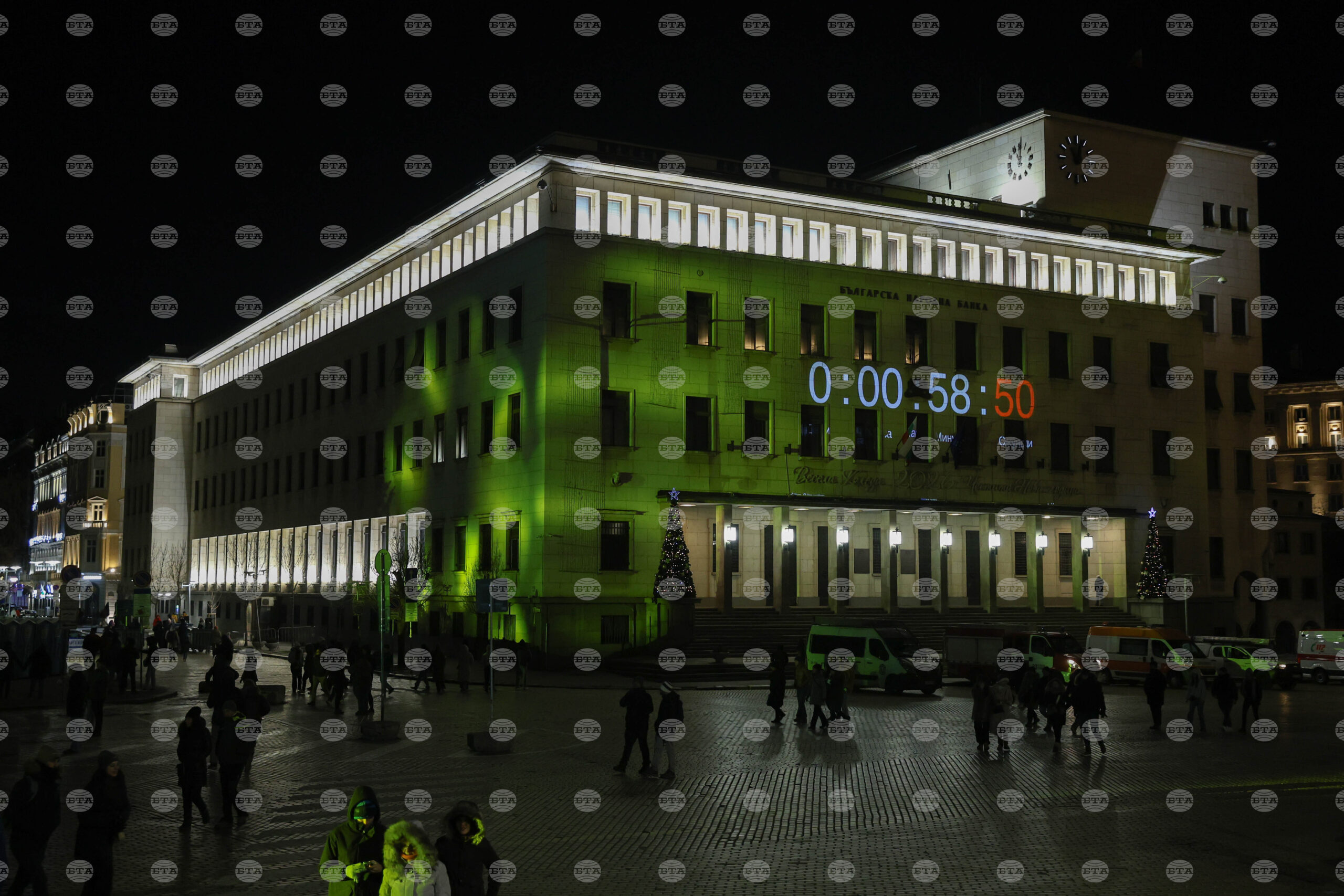
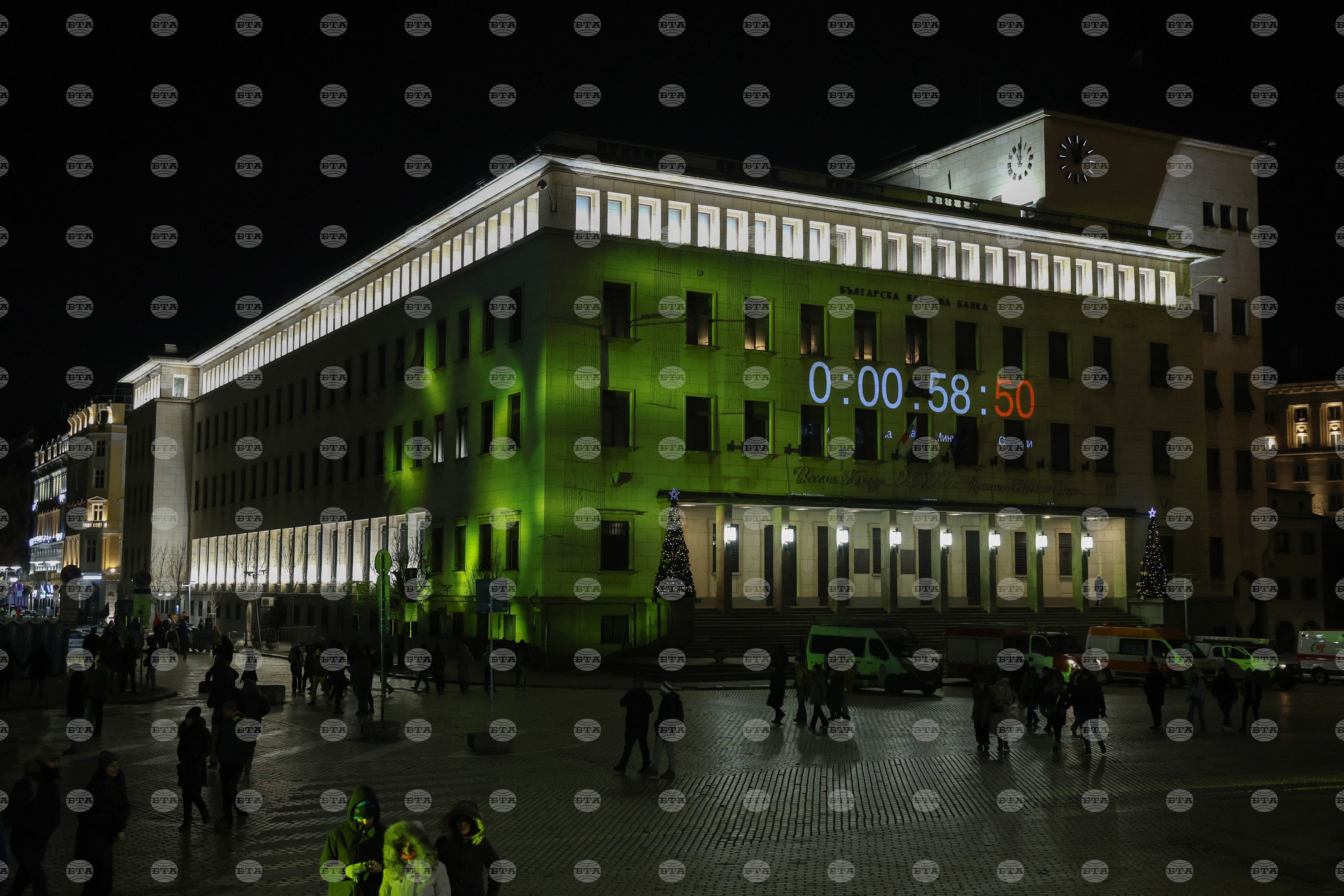
January 1, 2026: The euro becomes Bulgaria’s official currency. All accounts, deposits, loans and other financial products in lev terms are converted automatically into euro at the official conversion rate with no fees. The rate cannot be rounded or shortened during conversion. After conversion, the resulting amount remains unchanged or is rounded up or down to two decimal places.
January 1, 2026: Bulgaria accedes to the eurozone as its 21st member state. The BNB becomes part of the Eurosystem and pays up the remainder of its subscribed capital to the ECB (the country’s share in the capital is 0.9783%, amounting to EUR 105,901,044.16). The BNB Governor becomes a full voting member of the ECB Governing Council. He takes turns with the national central bank governors of 15 other eurozone countries (Austria, Belgium, Croatia, Cyprus, Estonia, Finland, Greece, Ireland, Latvia, Lithuania, Luxembourg, Malta, Portugal, Slovakia, and Slovenia) using 11 voting rights on a monthly rotation. The BNB also becomes a full member of the Single Supervisory Mechanism.
January 1, 2026: The Bulgarian market joins the Eurosystem’s TARGET services for settling payments (T2), for settling securities (T2S), for setting instant payments (TIPS), and for collateral management of Eurosystem credit operations (ECMS).
January 1, 2026: A Coordination Centre on the Euro Adoption goes into operation, tasked with ensuring seamless interaction of central, regional and municipal bodies on control activities, communication and addressing problems that individuals and businesses may encounter during the dual display and dual circulation periods. The Centre, headed by the Chair of the State Commission for Commodity Exchanges and Wholesale Markets Vladimir Ivanov, is set up by a Council of Ministers decision on December 30, 2025.
January 1-11, 2026: To celebrate Bulgaria’s accession to the euro area, the southern façade of the ECB’s main building in Frankfurt am Main is lighted up every night from 17:30 CET. The illumination features the greeting “Welcome, Bulgaria” in all languages of the eurozone countries, a presentation of the Bulgarian national side of the EUR 0.50, 1 and 2 coins, blue and yellow visuals complemented by bubbles containing social and cultural data about the number of countries, languages and major cities in Europe. The visual concept symbolizes “unity in diversity” and highlights the European identity and the importance of the euro area enlargement with the accession of Bulgaria.
January 1-31, 2026: During a month-long period of dual circulation, both lev and euro banknotes and coins are legal tender in Bulgaria. Cash payments can be made in either currency, but the change must be in euro if enough euro cash is at hand. Mixed-currency payments and change returns are not allowed. Cashless transactions and ATM withdrawals are in euro only.
January 1 – March 2, 2026: All national central banks in the other 20 eurozone member states exchange lev banknotes for euro banknotes free of charge at the official exchange rate. The exchange limit is BGN 2,000 for any given client/transaction on any one day.
January 1 – December 31, 2026: All commercial banks and designated post offices in smaller settlements where there are no bank branches are obliged to exchange lev cash for euro. Minimum advance notices for single exchange transactions: three business days for over BGN 30,000 at banks and three to five business days for over BGN 1,000 at post offices. At post offices, the daily exchange limit is BGN 10,000 per individual. The BNB will exchange the old for the new currency indefinitely, without limits and at no charge.
February 1, 2026: The euro becomes the sole legal tender in Bulgaria, replacing the lev, which is no longer accepted for cash payments.
June 30, 2026: Commercial banks and post offices may begin to charge fees for exchanging lev banknotes and coins.
January 1, 2027: Commercial banks and post offices are no longer obliged to exchange lev banknotes and coins. Bulgaria in the Eurozone: Timeline 2025 THE NEWS FROM BULGARIA – NEWS AGENCY 2009-2025 2025-12-31 18:25:00 Latest news World news Country news Most important news latest news most important latest of the day Justice Petar Nizamov Feathers Petar Nizamov- Feathers Justice bg iustitia.bg iustitia iusticia usticia investigation Burgas Bulgaria news news of the last hour news of the day news of today Bulgaria news The news from Bulgaria blitz news top news most important most commented latest news Boyko Borisov news weather coronavirus news news weather facebook youtube facebook instagram news today news of the last minutes news today today news news bg news leading news hot news bg news site for news all news news bg news of the last hour latest latest news bg news of today news today news today news of the last hour latest news today news bg news news 24 hours news vesti bg novini news world bird bg bivol bg bivol trud bg novini latest news today novinite bg news hello bulgaria political party coat of arms delyan peevski scandalous Bulgarian National Television Free Europe Television scandal exclusive live tv live right now tv tv online tv program bg live now tv news online tv online live court Burgas court Burgas district court Burgas court Burgas district court Burgas district court Burgas appellate court Burgas prosecutor Burgas prosecutor’s office Burgas district prosecutor’s office Burgas district prosecutor’s office Burgas district prosecutor’s office Burgas district prosecutor’s office Burgas district prosecutor’s office Burgas district prosecutor’s office Prosecutor General Ivan Geshev Prosecutor Geshev Tsatsarov Ministry of Internal Affairs Burgas ODMR Burgas ODPR Burgas police Burgas district police Burgas prosecutor Tsatsarov SGS cases Varna court chairman of the SGS court decisions on civil cases decisions on cases Plovdiv court decision of the court decisions cases Varna court criminal cases district district court decisions work in the court SGS chairman of the SGS judges Sofia court post judges Plovdiv court Plovdiv judges Plovdiv Supreme Court Inspectorate Supreme Court Supreme Judicial Council lawyer lawyer criminal cases lawyer civil cases lawyer marriage cases lawyer administrative criminal law criminal process civil law civil process administrative law constitutional law