Balgarianovinite.com POLITICS
In an interview with the Bulgarian National Radio (BNR), political scientist Lyubomir Stefanov commented on the upcoming presidential elections, saying it was concerning that only three candidates had been announced several weeks before the start of the campaign. He said the opposition parties were “disturbingly silent” and suggested that Iliana Iotova had successfully imposed her candidacy on Progressive Bulgaria, leaving Prime Minister Rumen Radev with little choice but to accept it. According to Stefanov, Iotova would be a competitor to Radev in terms of image and ratings, while he does not like to share popularity. He also said the urban democratic community faced serious problems because candidates could not run successful campaigns without party support. Stefanov rejected claims that Ivan Hristanov could split the right-wing vote, calling the search for “another enemy” to blame an old and worn-out approach. He said a potential candidacy by Andrey Gurov and Georgi Kandev would be “the most expected surprise”. Stefanov did not expect GERB to nominate a presidential candidate, but said it would be strange for a party with its history not to do so and that such a decision would require explanation to voters, Bulgarian society and its partners – both in and outside of the country. He also predicted that Vazrazhdane would nominate a candidate, while he did not expect the Movement for Rights and Freedoms to do so.
In an interview with Trud, political scientist Stoycho Stoychev said Iliana Iotova was currently the clear frontrunner in the presidential race, while the debate among her potential opponents was more about who would not run. He said the parties that lost the April 19 elections were “heavily wounded” by Progressive Bulgaria’s victory and were now waiting for the ruling party to take the initiative, including on the presidential election. Stoychev said he saw no potential for protests in the autumn, noting that recent protests had increasingly been politically organized rather than spontaneous. Regarding the presidential election, he said the outcome was not necessarily a foregone conclusion, arguing that elections could produce surprises and that GERB would benefit from fielding its own candidate even if they lost. He expects Vazrazhdane to nominate Kostadin Kostadinov and that there was a possibility he could reach the second round if the democratic forces failed to unite behind a candidate. Stoychev argued that presidential elections should focus on individual candidates rather than political coalitions, as the president is elected directly and is constitutionally required to be non-partisan. He also questioned the reliability of opinion polls showing Iotova with almost 50% support, calling such figures potentially misleading.
On bTV’s morning show, sociologists Elena Darieva and Kolyo Kolev and political scientist Stoycho Stoychev discussed the upcoming presidential elections and the start of Parliament’s autumn session. Darieva noted that only three presidential candidacies were currently known publicly, compared with 23 candidate pairs in the November 2021 elections, and expected nominations to increase in the coming days and weeks, intensifying tensions both between the Government and opposition and among opposition parties. Kolev said the presidential election was not a foregone conclusion, as the full list of candidates and the redistribution of voter groups remained unclear. He said Vazrazhdane’s candidate could potentially become Iliana Iotova’s main opponent in the second round, although he described Iotova as being “several lengths ahead” at present and a strong favourite to reach and win the runoff. Stoychev also warned against making early predictions, recalling the 2001 presidential election, when the expected runoff between Bogomil Bonev and Petar Stoyanov did not materialize, with Georgi Parvanov reaching the second round. He said voter mobilization between the two rounds could significantly alter the outcome and noted that it was not even certain that a second round would be held. Stoychev also suggested that changes to the way the electorate is calculated could affect turnout figures.
24 Chasa features an article on Burgas Mayor Dimitar Nikolov by an unnamed author presenting the view that his popularity and record in Burgas have repeatedly made him a potential presidential candidate. The article argues that Nikolov’s appeal extends beyond his GERB party because portraying him as a pragmatic local leader who can attract political opponents to common causes, while noting his repeated strong election results and long tenure as Burgas mayor. It also recalls GERB leader Boyko Borissov’s previous comments that polling had shown a ticket involving Nikolov could perform strongly in presidential elections. The article says Nikolov is currently presenting himself as focused on organizing Eurovision in Burgas and has ruled out engaging in politics until the contest is successfully completed. It speculates that his reluctance to run for president may reflect an understanding that his strong support in Burgas would not necessarily translate into a nationwide victory. The author concludes by suggesting that Borissov and the urban right would now have to find a way to unite behind an “Everyone against Radev” approach in the autumn presidential election.
ECONOMY
On Bulgarian National Television’s (BNT) morning show, Energy Minister Iva Petrova said the situation around Kozloduy N-Plant was unusual but posed no risk to the electricity system or security of supply. She said the plant was operating under extreme and dynamic hydrological conditions caused by critically low water levels in the Danube, with Unit 5 operating at 94% capacity. Petrova said teams were working around the clock and dealing with additional problems caused by algae and the need for daily cleaning and maintenance of hydraulic facilities. She said Bulgaria had been preparing for the situation for several weeks, with inter-institutional coordination, updated hydrological analyses and hydraulic modelling carried out, and around seven possible solutions considered. The authorities have opted to build a 250-300 metre-long embankment near the plant, which Petrova said could be completed within 10-15 days, while other options were also being examined. She added that Bulgaria produces around 130,000 MWh of electricity daily against consumption of about 90,000 MWh and exports around 31,000 MWh, while measures had been taken to ensure additional capacity, including accelerating work at Maritsa East 2 TPP.
***
On bTV’s morning show, Svetoslav Benchev of the Bulgarian Petroleum and Gas Association said there was no fuel shortage in Bulgaria, but warned that diesel prices were likely to rise gradually in the coming weeks. He urged the public and industry to avoid terms such as “shortage” and “lack of supply”, warning that panic buying could itself cause shortages at petrol stations. Benchev said diesel was in short supply in Europe due to reduced Russian exports following attacks on refineries and lower deliveries through the Strait of Hormuz, while the United States and African refineries were currently the main sources of unlimited supplies. He stressed that Bulgaria faced no supply problems, as the country’s refinery was operating and could produce three times the quantities needed for the domestic market. According to Benchev, a significant fall in fuel prices was unlikely until there was greater clarity over the geopolitical situation, including developments in Iran and the war in Ukraine, while possible further US sanctions affecting oil supplies and production or an Iranian response could push prices higher.
On Nova Television’s morning show, Dimitar Hadzhidimitrov of the Association of Fuel Traders, Producers, Importers and Carriers said global diesel stocks had fallen to a record low, putting upward pressure on prices at petrol stations. He said the global shortage of diesel was due to several factors, including US-Iran relations and attacks on Russian refineries. Hadzhidimitrov noted that crude oil was priced at around USD 90-92 a barrel, while diesel had reached more than USD 1,300 because refineries were unable to process sufficient quantities. He said diesel accounted for around 50% of fuel consumption in Bulgaria, with 60-65% of demand coming from transport, agriculture and the processing industry. Hadzhidimitrov expected prices to continue rising gradually next week, saying diesel was already selling for nearly EUR 1.90 per litre at some petrol stations in central Sofia, while prices exceeded EUR 2 in 90% of EU countries. He also noted that drivers tend to fill their tanks when prices rise sharply because of rumours that fuel will become even more expensive. According to Hadzhidimitrov, Bulgaria has an advantage because its refinery in Burgas guarantees uninterrupted supplies.
***
On Nova Television’s morning show, Agriculture Minister Plamen Abrovski said the Government had allocated sufficient funds to support farmers, including nearly EUR 45 million in emergency aid for sensitive sectors such as fruit and vegetables and livestock, and EUR 85 million for producers who had suffered income losses of at least 30% due to adverse events. He said further support would include EUR 170 million in so-called “Iranian aid” of which EUR 100 million is for fuel compensation and EUR 70 million for fertilizers, EUR 300 million in direct payments and EUR 35 million for crises. Regarding a protest by producers in Sliven over low purchase prices, Abrovski said the presence of a single processor had created a monopoly and argued that cooperatives could help producers become more competitive. He said the new parliamentary session would include discussions on a Cooperatives Act, with the Government aiming to have it operational by the end of the year. Abrovski also said prices had fallen under the Government’s voluntary ‘Basket with Care’ initiative, with 14 retail chains now participating. He said inspections would be stepped up over imports of cheap third-country produce, including tomatoes, and noted that authorities had recently seized 11 tonnes of peppers with excessive pesticide levels. Abrovski also described the distribution of counterfeit butter as a crime, saying deliberate adulteration of food amounted to poisoning people.
***
On BNT’s morning show, Fruit and Vegetable Branch Chamber Chair Tsvetan Tsekov said retail trade was more than 80% controlled by retail chains, putting pressure on agricultural producers, particularly in the fruit and vegetable and dairy sectors. He said analyses by the Commission for Protection of Competition had identified unfair practices, while consumers faced mark-ups of between 300% and 400%. Tsekov said the sector had been warning for years about its vulnerability, with the lack of adequate policies and strategies leading to a decline in both producers and production. He described a fair price for fruit and vegetables as an “abstract concept” at present, saying producers were selling below cost and at a loss, while large mark-ups accumulated between the producer and the end consumer. According to Tsekov, Bulgaria does not have a free market, as several traders control two-thirds of wholesale trade. He cited 62 inspections by the National Revenue Agency in August, 50 of which found irregularities, including missing cash registers and failure to issue fiscal receipts. Tsekov called for a legal framework to control mark-ups rather than market prices and curb unfair competition that, he said, was destroying Bulgarian agricultural production.
***
Trud features an article on the rising cost of preparing children for the first school day, saying a reporter’s survey found that expenses are 30-40% higher this year due to increased prices of uniforms, school supplies, notebooks and other items. Families need at least EUR 300 to prepare one child for the new school year. Uniforms remain among the biggest expenses, with a complete set typically costing EUR 100-180 and, at some schools with more required items, exceeding EUR 250-350. Parents have widely complained about the high prices and questionable quality of some uniform items, while some schools have started organizing second-hand uniform markets. Stationery prices have also risen by 20-40%, according to booksellers, with some suppliers warning of further increases after September. Backpack prices, however, have remained relatively stable, with quality models costing around EUR 50-80.
JUDICIAL SYSTEM
On bTV’s morning show, former Constitutional Court judge and constitutional law lecturer Prof. Plamen Kirov said electing a new Supreme Judicial Council (SJC) was not in itself judicial reform, but rather a return to normality. He said the process of tackling oligarchy and reforming the judicial system had begun but it was too early to declare victory, noting that oligarchy in Bulgaria could not be reduced to two or three individuals. Kirov said a new SJC should be elected in accordance with the Constitution and the Judicial System Act, with both parliamentary and professional quotas, after the current council’s mandate had expired more than two years ago. He argued that genuine judicial reform should follow, describing it as a long-term process involving both the prosecution service and the courts. Kirov said changes could not be made “with a magic wand” and should be viewed as an evolution rather than a battle. He also questioned the constitutional compliance of legislation restricting the powers of an SJC whose mandate had expired. Regarding the election of the prosecutor general and proposed changes to the parliamentary majority required to elect SJC members, Kirov said qualified majorities were intended to encourage political compromise, which could only be achieved through dialogue.
DANUBE WATER LEVEL
On BNT’s morning show, Executive Agency Exploration and Maintenance of the Danube River Executive Director Ivelin Zanev said a rise in the Danube’s water level had been recorded, with increases of 2 cm at Ruse, 1 cm at Nikopol and 4 cm at Svishtov over the past 24 hours. He said the level at Ruse stood at minus 122 cm, still about 50 cm below the previous record low recorded in 2003. Zanev said heavy rainfall in the river’s western catchment, particularly in Austria and Hungary, was expected to bring a further rise of around 10-12 cm at different locations over the coming week. He attributed the extremely low levels to high temperatures and several months of severe drought in Bulgaria and Western Europe, noting that temperatures in Western Europe had reached 37-38 C as early as May. Zanev said only individual vessels were currently navigating the river where restrictions allowed, with the water level about 81 cm below the minimum navigational level. He identified Batin, Belene and Vardim as the most difficult sections for navigation, with depths of around 1.5 metres.
WORLD
BNR’s UK correspondent reports on an article in The Daily Telegraph, which says that according to Western intelligence sources, Russia has launched a new wave of attacks targeting European arms factories, including in Bulgaria, with the Kremlin recruiting members of local gangs to sabotage defence manufacturers in an attempt to test NATO’s resolve. Intelligence officials believe the attacks are carefully planned to avoid triggering Article 5, NATO’s mutual defence clause. This week, Latvia detained three of its citizens suspected of arson at a drone manufacturer in neighbouring Estonia. A building owned by Tallinn-based Milrem Robotics, which supplies weapons to Ukraine, was set on fire overnight on August 15. Estonian Prime Minister Kristen Michal said investigators were examining whether the incident was an act of sabotage and whether Russia was involved. The Daily Telegraph notes that, in addition to the Estonian arson, explosions occurred this month at major arms manufacturers in Italy and Bulgaria. In Bulgaria, a large explosion on August 10 hit a plant belonging to EMKO, one of the country’s largest private arms manufacturers, which produces 155-mm artillery ammunition for Ukraine. A fire in a lorry parked near a warehouse caused a larger blaze and the subsequent explosion. Three days later, a similar explosion occurred at an ammunition factory operated by KNDS Ammo Italy in Colleferro, near Rome. The newspaper says Italian and Bulgarian authorities have sought to play down possible Russian involvement, while Western intelligence believes Russia rarely leaves evidence that would allow such attacks to be directly attributed to Moscow.
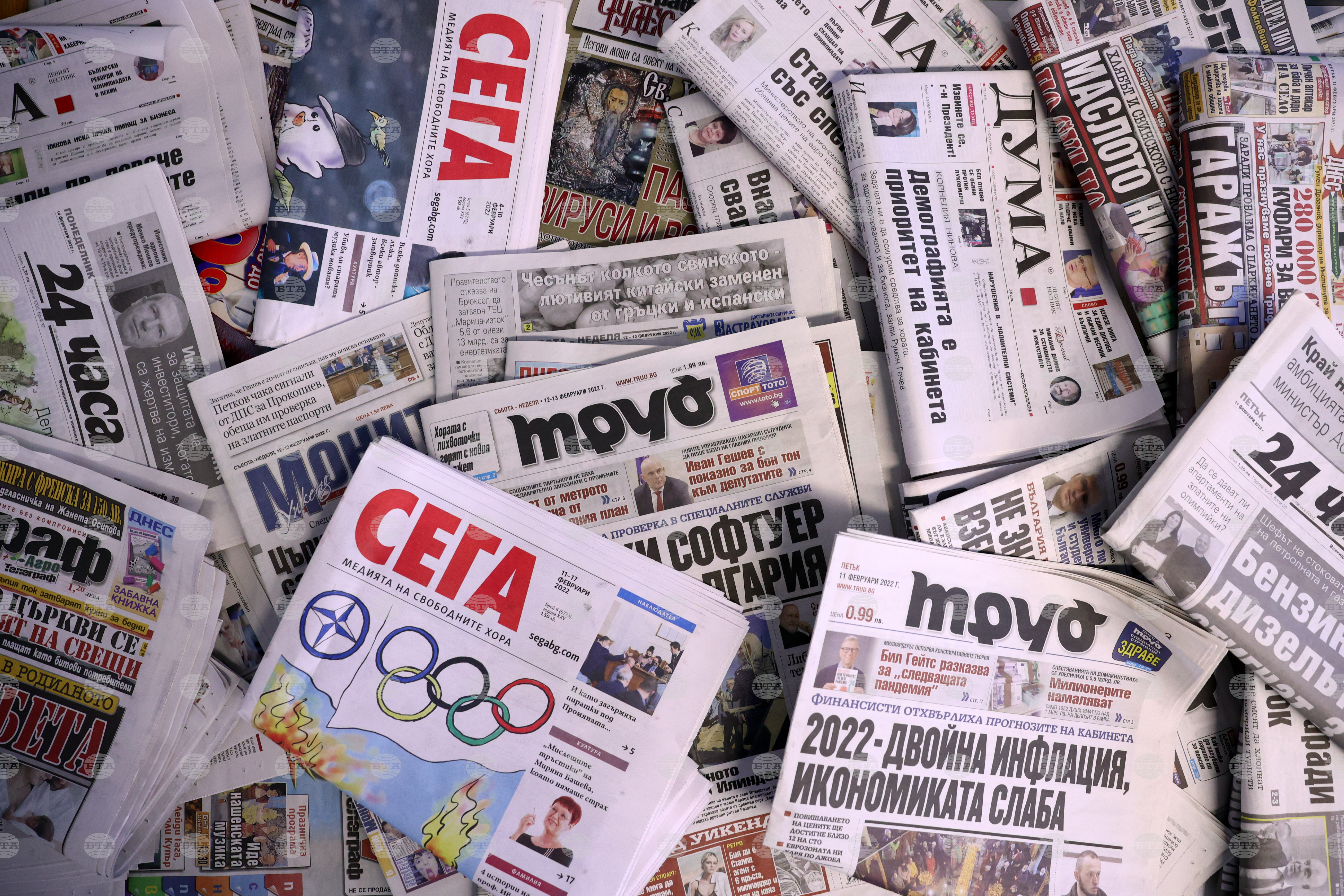
Media Review: August 24 2026 THE NEWS FROM BULGARIA – NEWS AGENCY 2009-2025 2026-08-24 10:13:16
Latest news World news Country news Most important news latest news most important latest of the day Justice Petar Nizamov Feathers Petar Nizamov- Feathers Justice bg iustitia.bg iustitia iusticia usticia investigation Burgas Bulgaria news news of the last hour news of the day news of today Bulgaria news The news from Bulgaria blitz news top news most important most commented latest news Boyko Borisov news weather coronavirus news news weather facebook youtube facebook instagram news today news of the last minutes news today today news news bg news leading news hot news bg news site for news all news news bg news of the last hour latest latest news bg news of today news today news today news of the last hour latest news today news bg news news 24 hours news vesti bg novini news world bird bg bivol bg bivol trud bg novini latest news today novinite bg news hello bulgaria political party coat of arms delyan peevski scandalous Bulgarian National Television Free Europe Television scandal exclusive live tv live right now tv tv online tv program bg live now tv news online tv online live court Burgas court Burgas district court Burgas court Burgas district court Burgas district court Burgas appellate court Burgas prosecutor Burgas prosecutor’s office Burgas district prosecutor’s office Burgas district prosecutor’s office Burgas district prosecutor’s office Burgas district prosecutor’s office Burgas district prosecutor’s office Burgas district prosecutor’s office Prosecutor General Ivan Geshev Prosecutor Geshev Tsatsarov Ministry of Internal Affairs Burgas ODMR Burgas ODPR Burgas police Burgas district police Burgas prosecutor Tsatsarov SGS cases Varna court chairman of the SGS court decisions on civil cases decisions on cases Plovdiv court decision of the court decisions cases Varna court criminal cases district district court decisions work in the court SGS chairman of the SGS judges Sofia court post judges Plovdiv court Plovdiv judges Plovdiv Supreme Court Inspectorate Supreme Court Supreme Judicial Council lawyer lawyer criminal cases lawyer civil cases lawyer marriage cases lawyer administrative criminal law criminal process civil law civil process administrative law constitutional law
БЪЛГАРИЯ НОВИНИТЕ – ИНФОРМАЦИОННА АГЕНЦИЯ 2009-2026 2026-08-24 10:13:16