Balgarianovinite.com The Minister of Education and Science Krasimir Valchev presented the 2025 Ranking of Higher Education Institutions in Bulgaria here on Friday. The 15th edition of the ranking system compares the performance of 51 accredited higher education institutions in Bulgaria across 52 professional fields. It uses 52 indicators ranging from teaching and research quality to graduate employment and income, as well as student feedback. This year, for the first time, an indicator measuring students’ assessment of attendance at lectures and seminars has been included.
According to the 2025 ranking, getting a higher degree leads to better chances of success in the job market. Data indicates that 85% of employed graduates who completed master’s programmes after secondary education in the previous five years and 70% of those who completed master’s programmes after obtaining a higher education degree work in positions for university graduates or in their chosen field. In contrast, only 51% of those who completed bachelor’s programmes work in similar positions. Master’s degree graduates also have higher incomes, a higher proportion of insured individuals and lower unemployment than those who have completed bachelor’s programmes.
On average, among all Bulgarian citizens who graduated from higher education in Bulgaria in the previous five years, 61% are employed in a position requiring higher education or practising a professional vocation, which is the same as last year, compared to 46% in 2014. Unemployment among this group remains at just over 2%, with the rate for those who completed a master’s programme after secondary education standing at around 1%. The proportion of graduates who are not insured in the country has also remained at last year’s record low of 14%, compared to over 25% in 2014. The average taxable income of graduates is increasing, rising from BGN 2,523 last year to BGN 2,771, and up from just BGN 980 in 2015 – representing a nearly threefold increase over the last decade.
Despite these positive trends, the latest ranking reveals that there are significant disparities in income levels, unemployment rates, and the utilization of higher education qualifications among graduates, depending on their chosen professional field and the specific higher education institution they attended, even within the same field.
The lowest unemployment rate (below 1%) is observed among graduates in the fields of “Military Affairs”, “Medicine”, “Pharmacy”, “Metallurgy”, and “Dental Medicine”, while the highest rate is observed among graduates in “Social Activities” (3.88%). The largest proportion of graduates (over 94%) find employment in Bulgaria in the fields of “Theory and Management of Education”, “Metallurgy”, “Pharmacy and Military Affairs”, while the smallest proportion is among graduates in “Transport, Shipping and Aviation”, and “Fine Arts” (under 75%).
The highest degree of application of acquired higher education (over 90%) is observed among graduates in “Military Affairs”, “Medicine”, “Theory and Management of Education”, and “Dental Medicine”, and the lowest (25%) among graduates in “Tourism”.
Graduates in “Military Affairs” and “Informatics and Computer Sciences” earn the highest average taxable income (over BGN 4,700), followed by those who graduated in “National Security”, “Communication and Computer Engineering”, “Mathematics”, “Metallurgy”, “Public Health”, “Exploration, Extraction, and Processing of Minerals”, “Energy”, “Medicine”, and “Electrical Engineering, Electronics, and Automation” (between BGN 3,300 and BGN 3,800). Among specific higher education institutions, the highest average taxable income is earned by graduates of master’s programmes in “Administration and Management” at the American University (BGN 10,108), “Informatics and Computer Sciences” at St. Kliment Ohridski University of Sofia (BGN 8,568), and “Electrical Engineering, Electronics, and Automation” at New Bulgarian University (BGN 7,919).
Among bachelor’s degree holders, the highest taxable income is earned by those who graduated in “Informatics and Computer Science” at the St. Kliment Ohridski University of Sofia (BGN 7,107).
The four professional fields with the highest number of students in 2025 are: Economics (26,996 students), Pedagogy (16,713 students), Medicine (13,485 students) and Administration and Management (11,773 students). For the second consecutive year, the fewest students are enrolled in the Theory of Arts field (53).
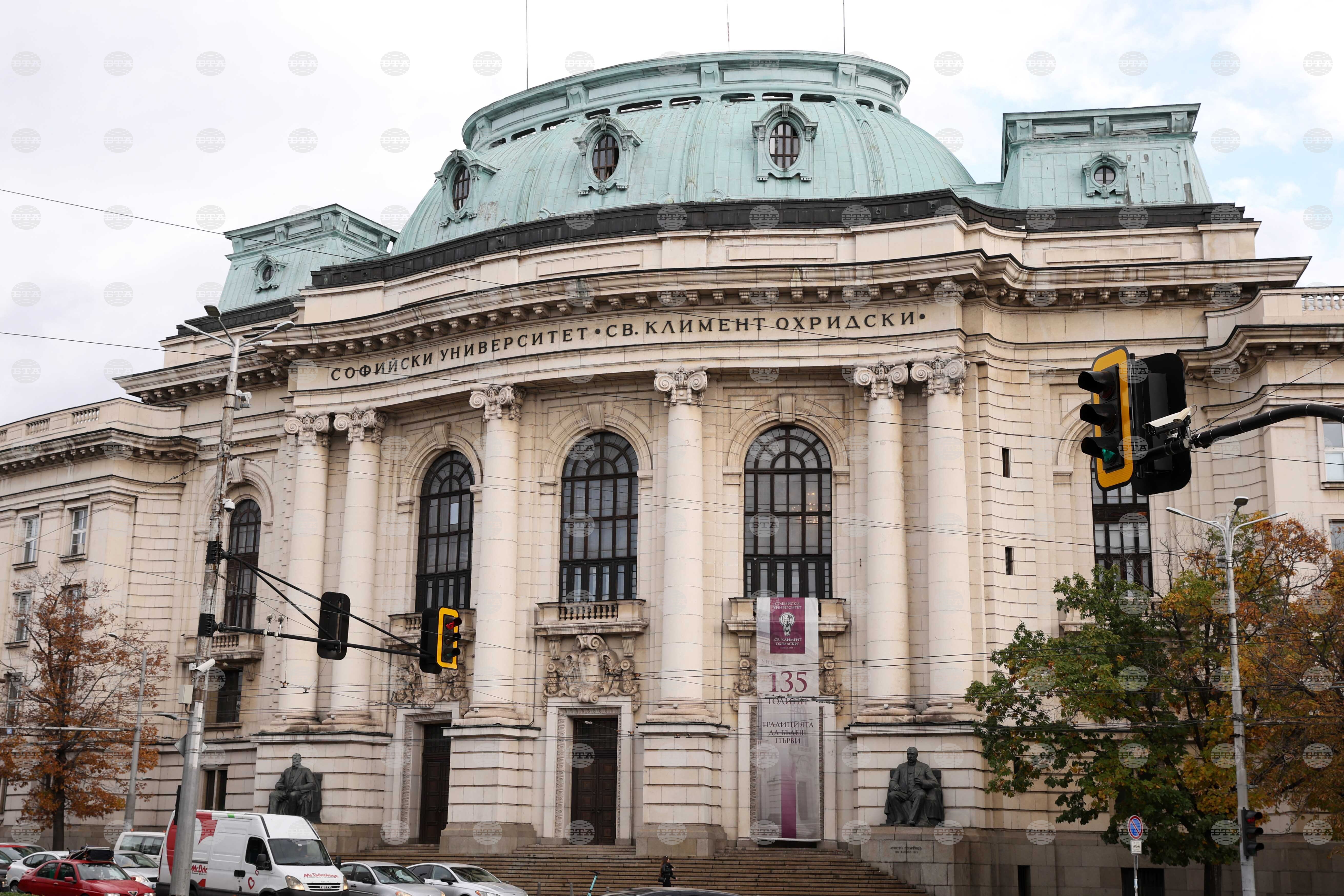
St. Kliment Ohridski University of Sofia is the higher education institution with the largest number of active students. Twelve of the country’s higher education institutions have fewer than 1,000 students, including one with fewer than 100. Half of the country’s students are enrolled in the eight largest universities. The other half study at the remaining 43 accredited institutions. Private higher education institutions account for 11% of students in the country, with the highest proportion in the following professional fields: “Theatre and Film Arts” (68%), “Fine Arts” (43%), “Administration and Management” (39%), “Theory of Arts” (36%), “Psychology” (36%) and “National Security” (32%).
Over the last decade, the proportion of foreign students in Bulgaria has more than doubled, rising from around 4% in 2013 to almost 9% of the student population in 2025. For the second consecutive year, the proportion of foreign students is highest in “Medicine” (59%), “Dental Medicine” (48%) and “Veterinary Medicine” (33%) programmes. In five other fields of study, foreign students make up more than 10% of the total student population. These are “Pharmacy” (16%), “Tourism” (14%), “Transport, Shipping and Aviation” (12%), “Music and Dance Arts” (12%), and “Theory and Management of Education” (11%).
There are 111 joint programmes offered by Bulgarian higher education institutions in partnership with foreign educational institutions. Of these programmes, 43 are active, i.e. they have at least one enrolled student. In 2025, there are active joint programmes in 20 professional fields across the country, with 2.5% of all active students enrolled in these programmes.
In the Bulgarian University Rating System’s general standardized rankings by professional field for 2025, St. Kliment Ohridski University of Sofia ranked first in 22 professional fields out of the 29 in which it participated. The Technical University of Sofia ranked first in six fields out of 11. The Technical University of Sofia ranked first in six professional fields out of 11. The Medical University of Sofia ranked first in all five fields in which it offers training. The University of Chemical Technology and Metallurgy ranked first in three out of six fields. The Agricultural University in Plovdiv and Trakia University in Stara Zagora both ranked first in two fields. Thirteen other higher education institutions topped one ranking each.
The 2025 Ranking of Higher Education Institutions in Bulgaria was updated at the request of the Ministry of Education and Science, with the data updated by the IOO-S consortium, comprising the Open Society Institute – Sofia and Sirma Group. Ranking of Higher Education Institutions in Bulgaria Presented by Education Minister 2025 THE NEWS FROM BULGARIA – NEWS AGENCY 2009-2025 2025-11-21 11:58:59 Latest news World news Country news Most important news latest news most important latest of the day Justice Petar Nizamov Feathers Petar Nizamov- Feathers Justice bg iustitia.bg iustitia iusticia usticia investigation Burgas Bulgaria news news of the last hour news of the day news of today Bulgaria news The news from Bulgaria blitz news top news most important most commented latest news Boyko Borisov news weather coronavirus news news weather facebook youtube facebook instagram news today news of the last minutes news today today news news bg news leading news hot news bg news site for news all news news bg news of the last hour latest latest news bg news of today news today news today news of the last hour latest news today news bg news news 24 hours news vesti bg novini news world bird bg bivol bg bivol trud bg novini latest news today novinite bg news hello bulgaria political party coat of arms delyan peevski scandalous Bulgarian National Television Free Europe Television scandal exclusive live tv live right now tv tv online tv program bg live now tv news online tv online live court Burgas court Burgas district court Burgas court Burgas district court Burgas district court Burgas appellate court Burgas prosecutor Burgas prosecutor’s office Burgas district prosecutor’s office Burgas district prosecutor’s office Burgas district prosecutor’s office Burgas district prosecutor’s office Burgas district prosecutor’s office Burgas district prosecutor’s office Prosecutor General Ivan Geshev Prosecutor Geshev Tsatsarov Ministry of Internal Affairs Burgas ODMR Burgas ODPR Burgas police Burgas district police Burgas prosecutor Tsatsarov SGS cases Varna court chairman of the SGS court decisions on civil cases decisions on cases Plovdiv court decision of the court decisions cases Varna court criminal cases district district court decisions work in the court SGS chairman of the SGS judges Sofia court post judges Plovdiv court Plovdiv judges Plovdiv Supreme Court Inspectorate Supreme Court Supreme Judicial Council lawyer lawyer criminal cases lawyer civil cases lawyer marriage cases lawyer administrative criminal law criminal process civil law civil process administrative law constitutional law