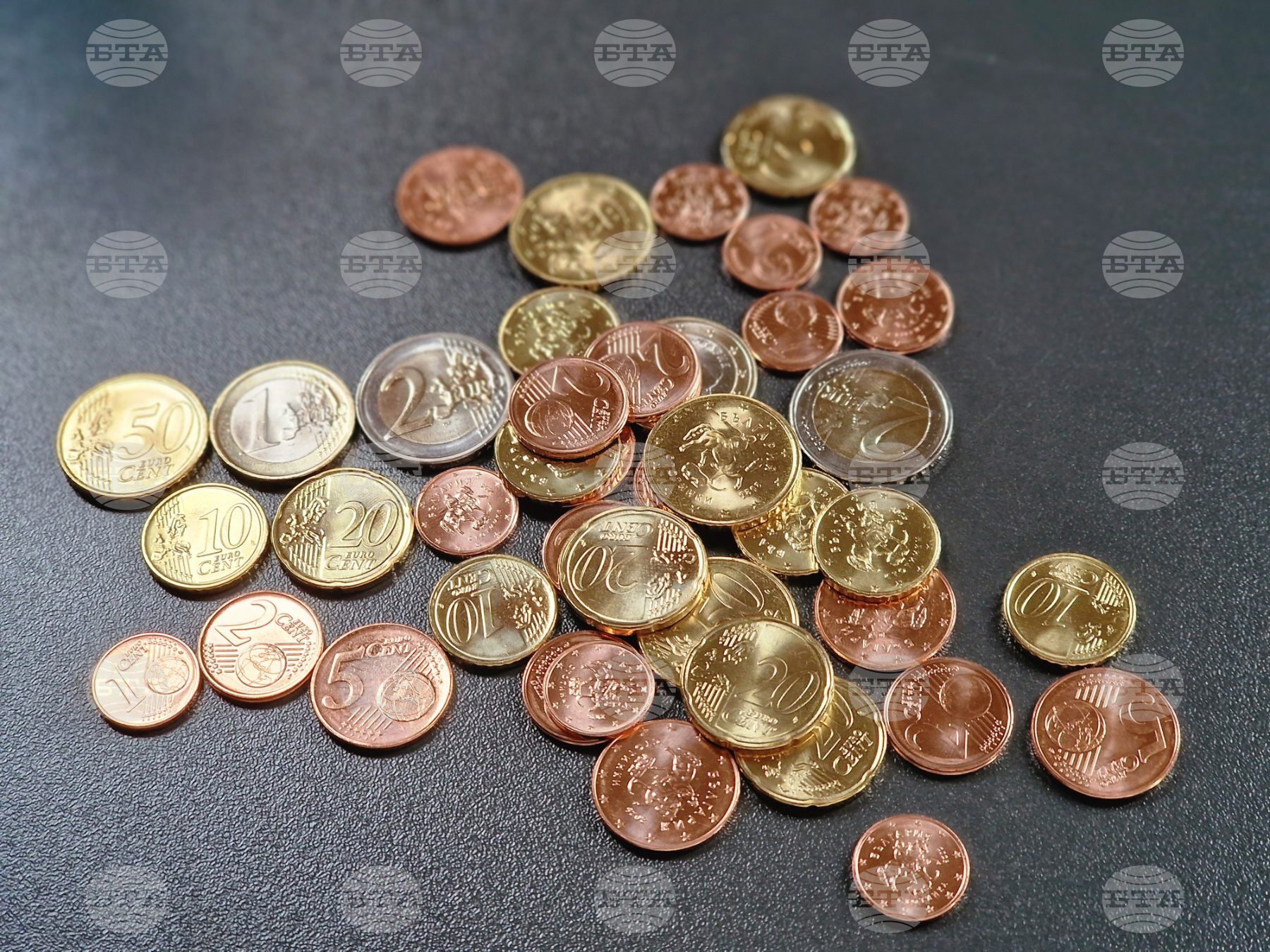
Balgarianovinite.com Playing “shop” at home is one of the practical ways parents can explain to very young children the change of currency that Bulgaria will undergo on January 1, 2026. A shop set up in euros helps children get used to the new coins and banknotes, and to practise basic calculations, financial expert and consultant Natalia Todorova told BTA in connection with the replacement of the lev with the euro. Now, is also a good time to make a new euro piggy bank together with the children, Todorova added. Families can even come up with a shared savings challenge.
Todorova advises parents to set aside time for the topic, as it is harder and more abstract for children to understand that switching to the euro does not mean a loss of value, but simply a new “unit of measurement” for money. “For young children, a smaller number is naturally perceived as having less value, which can lead to worries such as “They’re going to take half the money from my piggy bank,” the expert explained.
She added that using concrete, easy-to-understand examples is helpful: “We can compare it to length. If a room is three metres wide, that’s close to ten feet. The room hasn’t magically grown, we’re just measuring it differently,” Todorova said.
Children learn best through real-life situations, and shared games and small family challenges can also help develop other important financial skills: planning, saving, allocating expenses, choosing between needs and wants, and gradually understanding the value of money as a tool for achieving goals, the expert explained.
Pocket money and financial literacy
With younger children, it is important to show them what the new money looks like, to examine the coins and banknotes together so they feel confident and calm recognising them, to calculate together what they can buy with their pocket money or savings, and to look at real prices in euros and levs in shops or on toy websites, Todorova said.
The transition to the euro is a suitable moment for families to introduce important financial lessons at home by using children’s natural curiosity, she added. Pocket money is a child’s first personal budget, from the beginning of the new year it can be given directly in euros, which will make things easier for children.
Shopping together and reading price labels with dual currency display is also a good way for children to understand the value of money, to see the difference between what they want to buy and what they can afford within their budget, the expert explained.
For older children, the currency change opens the door to discussions on more complex topics such as inflation, savings, investments and financial planning, subjects that often remain unclear without family discussions, Todorova said.
She believes this is also a good moment for parents to review their own financial habits. Whether we are talking about levs or euros, sensible budgeting, saving and investing remain key skills, the expert added. “When we focus only on shop prices, we forget that inflation affects not just our expenses but also our savings. It’s time to think about how we manage them and whether our money is working for us,” Todorova stated.
Families should also be mindful of the psychology of numbers, she added, as smaller figures in euros can create a feeling of “lighter spending”. Keeping a budget in euros helps with better planning and faster adjustment to the new unit of measurement, she said.
According to the financial expert, some children may find the transition more difficult and may develop a kind of emotional attachment to the lev, as young children often associate value directly with the physical form of money. A difficult but important concept is understanding that value does not lie in the coin or banknote itself, but in what we choose to do with it. Todorova advises letting children keep a lev coin or stotinka as a keepsake, which can ease the sense of separation.
What will happen with the school curriculum
Regarding the school curriculum and the necessary changes related to the adoption of the euro, Todorova explained that updates and adjustments should have been made at the start of the current school year, so students and families would have time to familiarise themselves with the topic. Instead, textbooks have still not been adapted, and math problems involving euros are yet to be developed, including illustrations of euro banknotes in workbooks, she said. Although the euro topic is absent from the official curriculum, students’ questions are already there, Todorova added.
Younger students need to focus on recognising and using coins and banknotes. Middle grade students should focus on practical issues such as prices and dual display. Upper secondary school students need to focus on the broader context, including stability, eurozone integration and economic effects, Todorova said. For the oldest students the aim is to provoke critical thinking, encourage them to seek and analyse information from reliable sources, to form and defend opinions.
“Since the start of the school year, almost all invitations I receive to visit schools are related to the euro,” Todorova said. She added that the topic was not relevant a year ago, and some teachers were even concerned about how families would react. The politicisation of the question “for or against” the euro further leads to neglect of the topic and the freezing of discussions, instead of promoting information and knowledge, the expert added.When children and young people are actively involved, they build not only knowledge but also confidence to make informed decisions about their future, Todorova stated.
Bulgaria officially adopts the euro and becomes the 21st member of the eurozone on January 1, 2026. How to Explain Currency Change to Children: New Piggy Bank and Pocket Money in Euros 2025 THE NEWS FROM BULGARIA – NEWS AGENCY 2009-2025 2025-12-27 20:53:00 Latest news World news Country news Most important news latest news most important latest of the day Justice Petar Nizamov Feathers Petar Nizamov- Feathers Justice bg iustitia.bg iustitia iusticia usticia investigation Burgas Bulgaria news news of the last hour news of the day news of today Bulgaria news The news from Bulgaria blitz news top news most important most commented latest news Boyko Borisov news weather coronavirus news news weather facebook youtube facebook instagram news today news of the last minutes news today today news news bg news leading news hot news bg news site for news all news news bg news of the last hour latest latest news bg news of today news today news today news of the last hour latest news today news bg news news 24 hours news vesti bg novini news world bird bg bivol bg bivol trud bg novini latest news today novinite bg news hello bulgaria political party coat of arms delyan peevski scandalous Bulgarian National Television Free Europe Television scandal exclusive live tv live right now tv tv online tv program bg live now tv news online tv online live court Burgas court Burgas district court Burgas court Burgas district court Burgas district court Burgas appellate court Burgas prosecutor Burgas prosecutor’s office Burgas district prosecutor’s office Burgas district prosecutor’s office Burgas district prosecutor’s office Burgas district prosecutor’s office Burgas district prosecutor’s office Burgas district prosecutor’s office Prosecutor General Ivan Geshev Prosecutor Geshev Tsatsarov Ministry of Internal Affairs Burgas ODMR Burgas ODPR Burgas police Burgas district police Burgas prosecutor Tsatsarov SGS cases Varna court chairman of the SGS court decisions on civil cases decisions on cases Plovdiv court decision of the court decisions cases Varna court criminal cases district district court decisions work in the court SGS chairman of the SGS judges Sofia court post judges Plovdiv court Plovdiv judges Plovdiv Supreme Court Inspectorate Supreme Court Supreme Judicial Council lawyer lawyer criminal cases lawyer civil cases lawyer marriage cases lawyer administrative criminal law criminal process civil law civil process administrative law constitutional law