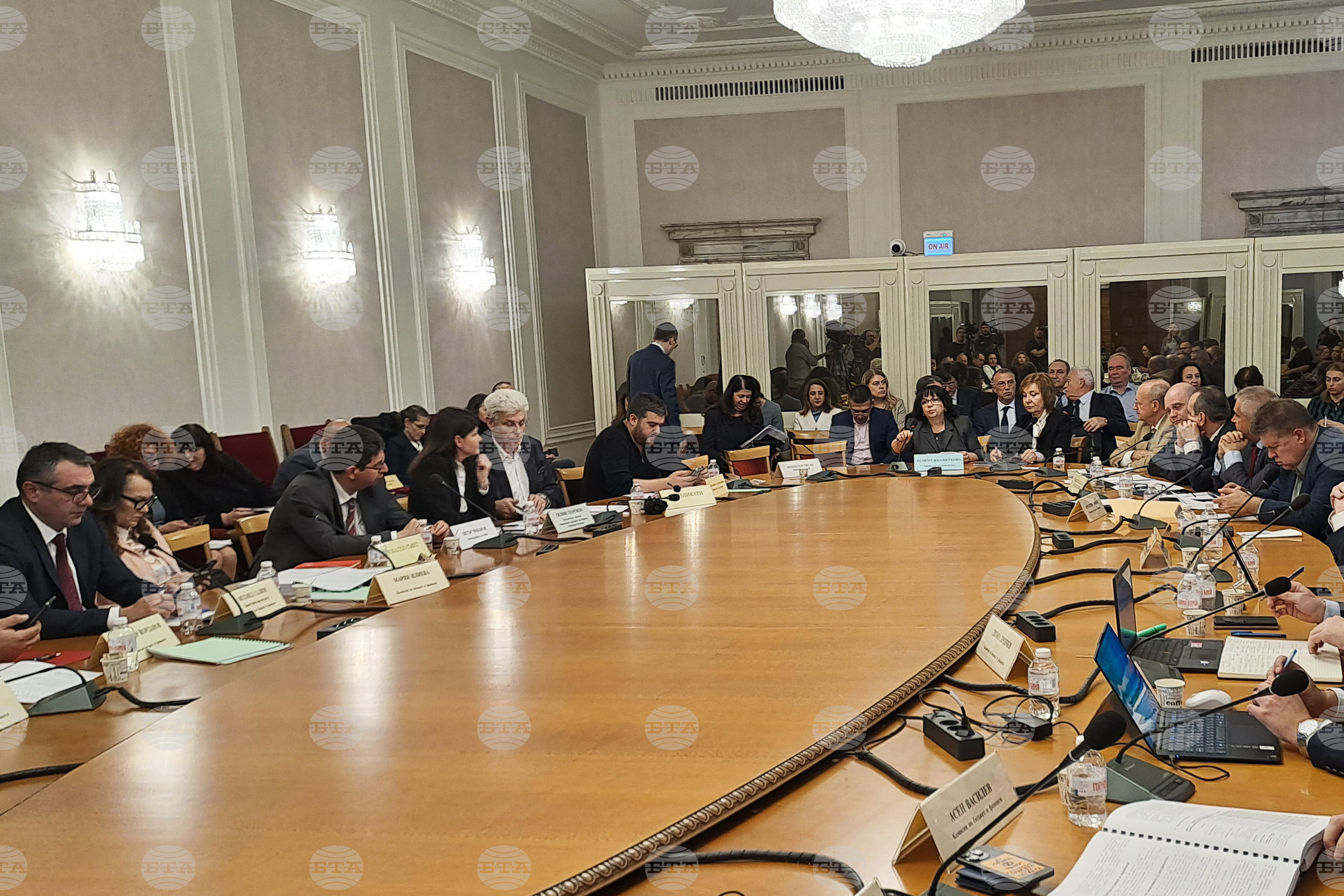
Balgarianovinite.com The 2026 State Budget Bill was adopted at first reading by the Parliamentary Committee on Budget and Finance with 13 votes in favour, four against and no abstentions.
The 2026 budget was drafted in accordance with the adopted first National Medium-Term Fiscal-Structural Plan of the Republic of Bulgaria for the 2025-2028 period, which contains policies, priorities, reforms, and investment plans for the medium term. These were also reflected in the national budget documents. In regard to fiscal policy, ensuring the long-term sustainability of public finances in order to increase confidence in the country and to create a predictable investment and business environment remains a priority, the Council of Ministers noted.
In the context of the national adoption of the euro that will take place on January 1, 2026, the information and documents relating to the budgetary procedure for 2026 have been prepared in euro at the official exchange rate under the Introduction of the Euro in the Republic of Bulgaria Act, which is set at BGN 1.95583 for EUR 1. The estimates for the 2026-2028 period reflect the trends in the autumn macroeconomic forecast for the development of the national economy, the main assumptions and estimates of the effect of discretionary revenue and expenditure measures.
The macroeconomic forecast, prepared by the Ministry of Finance, predicts economic growth of up to 2.7% in 2026, and ranging between 2.4 and 2.5% in 2027 and 2028. Average annual inflation for 2026 is expected to be close to that in 2025. i.e. 3.5%, with average annual inflation slowing to 2.9% in 2027 and 2.5% in 2028.
The budget balance under the consolidated fiscal programme (based on the national cash-based methodology), expressed as a share of GDP, for 2026 is a deficit of 3% of GDP. Keeping the deficit within the limits ensures that a number of expenditure policies are backed by corresponding revenue measures. The general government deficit is also 3% of GDP for 2026.
Public debt is forecast at EUR 37.6 billion (31.3% of GDP) in 2026, EUR 43.5 billion (34.2% of GDP) in 2027, rising to EUR 49 billion (36.6%) in 2028. In 2026, the maximum amount of new government debt that can be incurred is up to EUR 10.44 billion, including up to EUR 3.2 billion under the Security Action for Europe (SAFE) mechanism to strengthen the European defence industry.
The fiscal reserve will total EUR 2.4 billion. Key social measures include a minimum wage of EUR 620.20, childcare and parental allowances of EUR 460.17, and increases in social security ceilings to EUR 2,352–2,659. Pension contributions rise by 2 points in 2026 and 1 point in 2028, while public sector salaries, including teachers’, will increase.
Tax changes include raising the withholding tax on dividends to 10%, expanding electronic reporting and tracking, and incentives for electric vehicles. The budget aligns with EU fiscal rules and Bulgaria’s euro adoption plans.
Here is a takeaway from the comments by professional and employer organizations, the unions and political parties:
Lyuboslav Kostov, chief economist of the Confederation of Independent Trade Unions in Bulgaria (CITUB), said that Bulgaria’s economic growth is driven by consumption, so the budget’s focus on raising incomes supports growth. Kostov added that this policy cannot yet be viewed as inflationary.
Atanas Katsarchev, chief economist of the Podkrepa Confederation of Labour, argued that the budget lacks policies to address the demographic crisis. He also urged attention to remuneration in public media, where there were recent protests.
Silviya Georgieva from the National Association of Municipalities said that municipalities are satisfied with the macro-framework for local government. Georgieva called for updating property tax valuations, unchanged since 2006, to boost municipal revenue and bring real-estate activity out of the grey sector.
Rumen Radev from the Association of Industrial Capital said aggressive changes to the tax-insurance model have damaged employers’ trust, especially the unexpected rise in the maximum insurable income and contributions. Radev noted that limiting public-sector wage growth to 5% could save EUR 455 million.
Dobri Mitrev from the Bulgarian Industrial Association claimed that the budget “punishes” 2.1 million workers and compliant businesses. Mitrev criticized automatic minimum wage increases, mandatory NRA-approved sales software, and the expanded list of high-risk goods.
Boyan Nikolaev from the Confederation of Employers and Industrialists described the 2026 budget as “highly inflationary”. According to him, the government is creating a “monster” that may be uncontrollable for the next 5-10 years.
Tsvetan Simeonov from the Bulgarian Chamber of Commerce and Industry said the biggest problem for business is rising labour costs. Simeonov opposed raising social-security contributions by 2 percentage points, warning it can only have negative effects.
Petar Chobanov, Deputy Governor of the Bulgarian National Bank, emphasized the central bank’s focus on price stability and said Bulgaria should avoid running deficits near the 3% limit. Chobanov added he expected more discussion on eurozone accession and its economic effects.
Yordan Tsonev, MP from the Movement for Rights and Freedoms (MRF) – New Beginning, declared support for the budget, arguing that wages for teachers, doctors and police must rise. Tsonev rejected employers’ criticisms, noting Bulgaria’s very low 10% corporate tax compared to 20–25% in the EU.
Martin Dimitrov, MP from Continue the Change – Democratic Bulgaria, said that the 2026 budget abandons Bulgaria’s key competitive advantage – low taxes.
Velichie MP Maria Ilieva announced that her parliamentary group will not support the budget.
Continue the Change leader Assen Vassilev argued that the government is “decapitalizing” businesses by raising the dividend tax, while simultaneously “buying consumption” through higher social-security contributions.
Vazrazhdane MP Dimo Drentchev dismissed employers’ complaints as unfounded, saying they do not represent the middle class and will not mobilize protests.
Atanas Atanasov, MP from BSP-United Left, said that his party will support the budget, calling it social in nature, with measures that raise incomes at a crucial moment before eurozone entry. Budget Committee Approves at First Reading 2026 State Budget Bill 2025 THE NEWS FROM BULGARIA – NEWS AGENCY 2009-2025 2025-11-18 18:19:00 Latest news World news Country news Most important news latest news most important latest of the day Justice Petar Nizamov Feathers Petar Nizamov- Feathers Justice bg iustitia.bg iustitia iusticia usticia investigation Burgas Bulgaria news news of the last hour news of the day news of today Bulgaria news The news from Bulgaria blitz news top news most important most commented latest news Boyko Borisov news weather coronavirus news news weather facebook youtube facebook instagram news today news of the last minutes news today today news news bg news leading news hot news bg news site for news all news news bg news of the last hour latest latest news bg news of today news today news today news of the last hour latest news today news bg news news 24 hours news vesti bg novini news world bird bg bivol bg bivol trud bg novini latest news today novinite bg news hello bulgaria political party coat of arms delyan peevski scandalous Bulgarian National Television Free Europe Television scandal exclusive live tv live right now tv tv online tv program bg live now tv news online tv online live court Burgas court Burgas district court Burgas court Burgas district court Burgas district court Burgas appellate court Burgas prosecutor Burgas prosecutor’s office Burgas district prosecutor’s office Burgas district prosecutor’s office Burgas district prosecutor’s office Burgas district prosecutor’s office Burgas district prosecutor’s office Burgas district prosecutor’s office Prosecutor General Ivan Geshev Prosecutor Geshev Tsatsarov Ministry of Internal Affairs Burgas ODMR Burgas ODPR Burgas police Burgas district police Burgas prosecutor Tsatsarov SGS cases Varna court chairman of the SGS court decisions on civil cases decisions on cases Plovdiv court decision of the court decisions cases Varna court criminal cases district district court decisions work in the court SGS chairman of the SGS judges Sofia court post judges Plovdiv court Plovdiv judges Plovdiv Supreme Court Inspectorate Supreme Court Supreme Judicial Council lawyer lawyer criminal cases lawyer civil cases lawyer marriage cases lawyer administrative criminal law criminal process civil law civil process administrative law constitutional law