JD Vance Not Sure Trump Would Endorse Him in 2028: ‘I Don’t Know, Man’ 2026
AP Photo/Julia Demaree Nikhinson
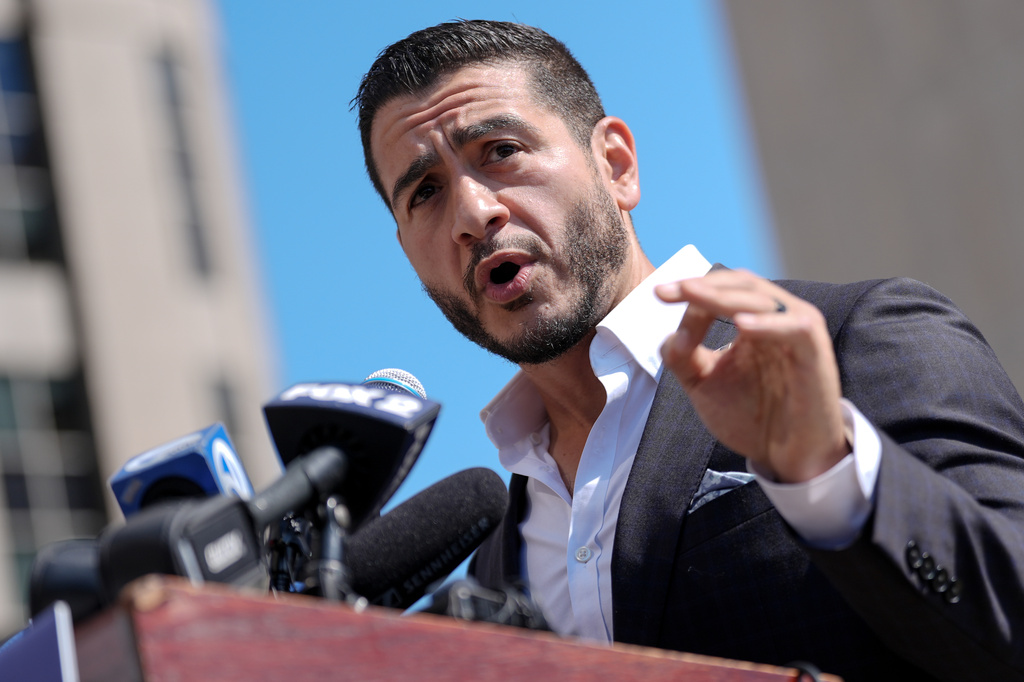
The Washington Post is facing criticism for an article about a viral video featuring a “young man” questioning Democratic Michigan Senate nominee Abdul El-Sayed but omitting the fact that “Tommy” was a Republican operative.
A Partial List of What Trump Has Left to Rename After His Proposed ‘New Mexico’ Rebrand 2026
The incident in question happened during one of El-Sayed’s campaign events over the weekend, in which an attendee who identified himself as “Tommy” asked about the Muslim Brotherhood, a talking point pushed by the Republican nominee, former Rep. Mike Rogers (R-MI).
“Will you disavow the Muslim Brotherhood?” asked Tommy.
“Sure. Yeah, absolutely,” replied El-Sayed. “Why are you asking the question?”
“Well, because they’re a terrorist group,” said Tommy.
“But what are you implying?” asked El-Sayed. “Do you assume that I wouldn’t?”
“Yes,” replied Tommy, “because I have not heard you disavow them yet.”
JUST IN: Kansas Man Arrested For Allegedly Threatening Trump Before MAGA Rally in Wichita 2026
“You’re asking the question because implicitly you assume that I’ll have dual loyalties, right?” El-Sayed retorted. “You assume that somehow I wouldn’t disavow, or that I’ll have some higher order allegiance than the Constitution.”
What followed were several minutes of El-Sayed discussing the Constitution and its protections of religious liberties for Christians, Muslims, atheists, and all Americans. The video was widely shared both by El-Sayed and his supporters, and by his critics; the above tweet posted by El-Sayed with the video has over 14 million views at the time this article was being written.
Liberal independent journalist Marisa Kabas identified “Tommy” as Thomas Teepell, and dug into Teepell’s work history as well as his father Timmy Teepell’s long career as a GOP strategist. Teepell was “no ordinary citizen” of this small Michigan town, wrote Kabas, “but a long-serving right-wing operative tied to Josh Hawley, Bobby Jindal, and one of the most influential Christian Nationalists in the country.”
The Wall Street Journal and The Guardian independently confirmed Kabas’ reporting, identifying Teepell as the “young man” who had questioned El-Sayed, along with his work history with Hawley and other Republicans. The Guardian’s report further noted that the accusations that El-Sayed has “family ties” to the Muslim Brotherhood come from a post on a conservative website that “resurfaced social media posts by his half-sister, the University of Chicago professor Eman Abdelhadi, describing their mother’s activism in the group in the 1970s,” but “[t]here is no evidence El-Sayed was personally involved; he was born in the 1980s and was not raised by his birth mother,” and “has called the suggestion that anyone in his family took part ‘an insane thing to assume.’”
On Sunday afternoon, the Post published an article by Erin Cox about the dustup between El-Sayed and Teepell headlined “El-Sayed’s exchange over Muslim Brotherhood stirs inspiration, condemnation,” which covered the variety of partisan responses to the video.
In the article, Cox identifies Teepell as “a young man,” “a young man who identified himself as ‘Tommy,’” “the questioner,” “the man,” and as someone “who said he identified as a Christian who lives by a Christian doctrine.”
At no point in the article does Cox mention that Teepell is a Republican or conservative at all, much less a GOP consultant son of a GOP consultant.
That omission drew accusations of “journalistic malpractice” and other criticism.
Wrote Norman Ornstein, contributing editor at The Atlantic: “I had to read this twice to make sure of a cringeworthy fact; this Washington Post story on the el-Sayed exchange w ‘Tommy’ does not even mention that Tommy is a paid right wing political operative, a staffer for Josh Hawley. Journalistic malpractice.”
It is not entirely clear what time on Sunday Kabas’ post was published; her website does not include timestamps (which could potentially be edited anyway), but I found a tweet sharing the article at 9:07 am ET Sunday. The Post article was published at 4:15 pm ET, seven hours later.
Another commenter tagged Matt Murray, the Post’s executive editor, citing the Guardian report and suggesting the article should have “provide[d] full context” of Teepell’s affiliations.
Leave a Comment