Balgarianovinite.com
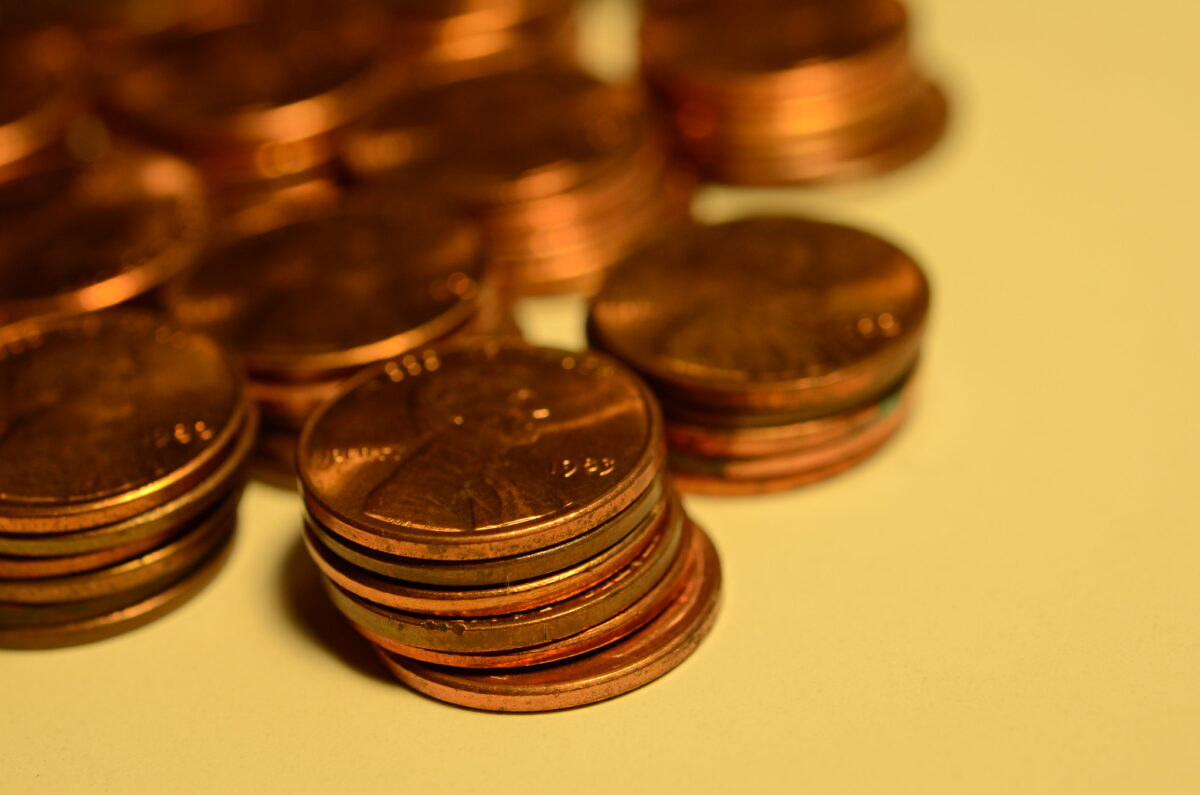
Image by sigckgc on Flickr via Creative Commons license.
The federal government stopped minting new pennies last week, but as one reporter who has extensively followed the saga of the little copper-colored coin discovered, there does not seem to be much of a plan for what to do next.
Among the slew of executive orders signed by President Donald Trump during his first few weeks of his second term was one that ordered the U.S. Mint to cease minting pennies, because each one “literally cost us more than 2 cents,” which he described as “so wasteful!” Unlike some of his other nominations and actions, this move was far less controversial and even garnered bipartisan praise.
The president understated the penny’s cost; it’s actually almost four cents per coin.
The last penny for general circulation was minted on Nov. 12 in Philadelphia. It remains legal tender until Congress passes a law changing its status.
But what to do now? Should retailers refuse to accept them? Should prices be rounded up or down? Other countries that have phased out low denomination coins had messaging campaigns and guidance for merchants, customers, banks, and others that would be affected.
That’s not happening so far in the U.S., wrote Caity Weaver, a staff writer for The Atlantic and The New York Times Magazine who has extensively studied the plight of the penny — and the mind-boggling budgetary burden that comes with minting the darn things.
According to Weaver, she spent “several months” last year trying to figure out why the U.S. was spending so much money minting pennies when “virtually no one-cent pieces were ever spent in the nationwide conduction of commerce,” a problem she deemed the “Perpetual Penny Paradox“:
Most pennies produced by the U.S. Mint are given out as change but never spent; this creates an incessant demand for new pennies to replace them, so that cash transactions that necessitate pennies (i.e., any concluding with a sum whose final digit is 1, 2, 3, 4, 6, 7, 8 or 9) can be settled. Because these replacement pennies will themselves not be spent, they will need to be replaced with new pennies that will also not be spent, and so will have to be replaced with new pennies that will not be spent, which will have to be replaced by new pennies (that will not be spent, and so will have to be replaced). In other words, we keep minting pennies because no one uses the pennies we mint.
“It is my miserable fate to possess more miscellaneous information about U.S. one-cent coins than, possibly, any other person on this planet,” wrote Weaver, drily noting that this was “data no one without a neurodevelopmental disorder would ever yearn to know.”
As part of her research, she interviewed “former directors of the Mint, members of Congress, professors of metallurgical engineering and of law, economists, charity workers, multiple manufacturers of those machines that transform regular pennies into souvenir smushed pennies, scrap-metal recyclers, historians, lobbyists, the CEO of Coinstar, coin collectors, sociologists, government auditors, and the paranoid goblins who perform the opaque work of the Federal Reserve.”
Naturally, with the last penny having been minted, Weaver was curious about what was next, but, to her dismay, “[t]he answer appears to be nothing at all.”
There are about 300 billion pennies in circulation, wrote Weaver, and now “there was no plan at all to do anything except stop making pennies.”
“This isn’t how it usually works when a smoothly running country elects to retire some portion of its currency,” she wrote, citing favorably how Canada had handled the same issue with “a robust public-information campaign, explaining to Canadians the logic behind its decision and publishing guidance (including little pictures) for how to round out cash transactions in the absence of pennies,” and encouraging people to turn in the coins, redeemable for face value for recycling.
The recycling option isn’t as good for American pennies, Weaver explained, because ours “are made mostly of zinc,” which has a much lower value than recycled copper. Plus, the copper and zinc in the coins isn’t easily separated.
Thus far, the federal government “has issued no guidance” about how to handle cash transactions that are still calculated to the cent as pennies drop out of circulation, or announced any plans about removing pennies from circulation, or otherwise smoothing the transition.
“So: No one is coming to collect all the useless pennies,” she wrote. “And no one is explaining how to get along without them. The government, in other words, is treating the pennies the way it has for decades: by making them Americans’ problem.”
The post ‘Pennies Are Trash Now’: Reporter Shocked to Discover ‘There Is No Plan’ Now That Feds Stopped Minting One-Cent Coins first appeared on Mediaite.
‘Pennies Are Trash Now’: Reporter Shocked to Discover ‘There Is No Plan’ Now That Feds Stopped Minting One-Cent Coins 2025 THE NEWS FROM BULGARIA – NEWS AGENCY 2009-2025 2025-11-18 07:28:19 Latest news World news Country news Most important news latest news most important latest of the day Justice Petar Nizamov Feathers Petar Nizamov- Feathers Justice bg iustitia.bg iustitia iusticia usticia investigation Burgas Bulgaria news news of the last hour news of the day news of today Bulgaria news The news from Bulgaria blitz news top news most important most commented latest news Boyko Borisov news weather coronavirus news news weather facebook youtube facebook instagram news today news of the last minutes news today today news news bg news leading news hot news bg news site for news all news news bg news of the last hour latest latest news bg news of today news today news today news of the last hour latest news today news bg news news 24 hours news vesti bg novini news world bird bg bivol bg bivol trud bg novini latest news today novinite bg news hello bulgaria political party coat of arms delyan peevski scandalous Bulgarian National Television Free Europe Television scandal exclusive live tv live right now tv tv online tv program bg live now tv news online tv online live court Burgas court Burgas district court Burgas court Burgas district court Burgas district court Burgas appellate court Burgas prosecutor Burgas prosecutor’s office Burgas district prosecutor’s office Burgas district prosecutor’s office Burgas district prosecutor’s office Burgas district prosecutor’s office Burgas district prosecutor’s office Burgas district prosecutor’s office Prosecutor General Ivan Geshev Prosecutor Geshev Tsatsarov Ministry of Internal Affairs Burgas ODMR Burgas ODPR Burgas police Burgas district police Burgas prosecutor Tsatsarov SGS cases Varna court chairman of the SGS court decisions on civil cases decisions on cases Plovdiv court decision of the court decisions cases Varna court criminal cases district district court decisions work in the court SGS chairman of the SGS judges Sofia court post judges Plovdiv court Plovdiv judges Plovdiv Supreme Court Inspectorate Supreme Court Supreme Judicial Council lawyer lawyer criminal cases lawyer civil cases lawyer marriage cases lawyer administrative criminal law criminal process civil law civil process administrative law constitutional law